
Mango farmers in Prachuap Khiri Khan are facing severe challenges due to unusually hot weather and water shortages, threatening the cultivation of the prized Nam Dok Mai Si Thong mango variety.
Veteran farmer and local exporter, Mr. Panom Samphueak, reports significant impacts on crop yields and export quality due to the harsh climatic conditions.
With over three decades of experience, 61-year-old Mr. Samphueak, a founding member of the off-season mango exporter group in Ao Noi, noted a disturbing trend over the past two years. The region has endured extreme temperatures and dry spells, significantly reducing water availability. “Previously, we could induce flowering three times a year,” Mr. Samphueak said. “Now, it has dropped to just twice, and the lack of sufficient water has stunted the growth of our mangoes.”
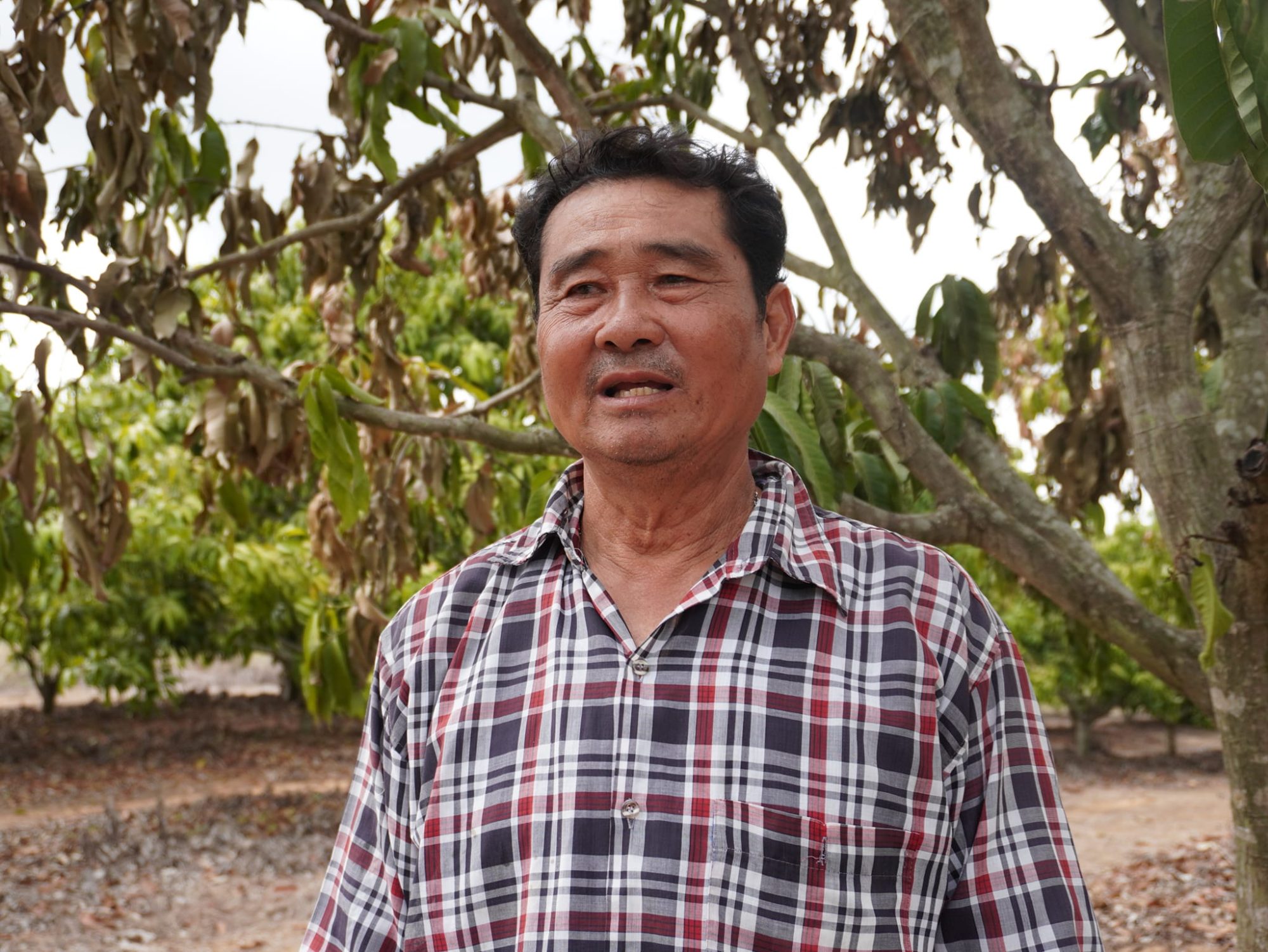
Mr. Samphueak
The smaller mangoes, now averaging about 200 grams, fail to meet the size requirements of export markets in countries like Korea, Japan, Singapore, Malaysia, and Hong Kong, which demand larger fruits weighing over 300 grams. This size discrepancy has left farmers with produce that cannot be exported, compounding their financial struggles.
The intense heat has not only affected the size of the mangoes but also led to a drop in their number. “The hot weather causes the leaves to fall, leading to fewer and smaller fruits,” explained Mr. Samphueak. He fears that the continuation of these conditions could lead to the death of more trees. Last year, 30 acres of mango trees died, and already this year, an acre has been lost.
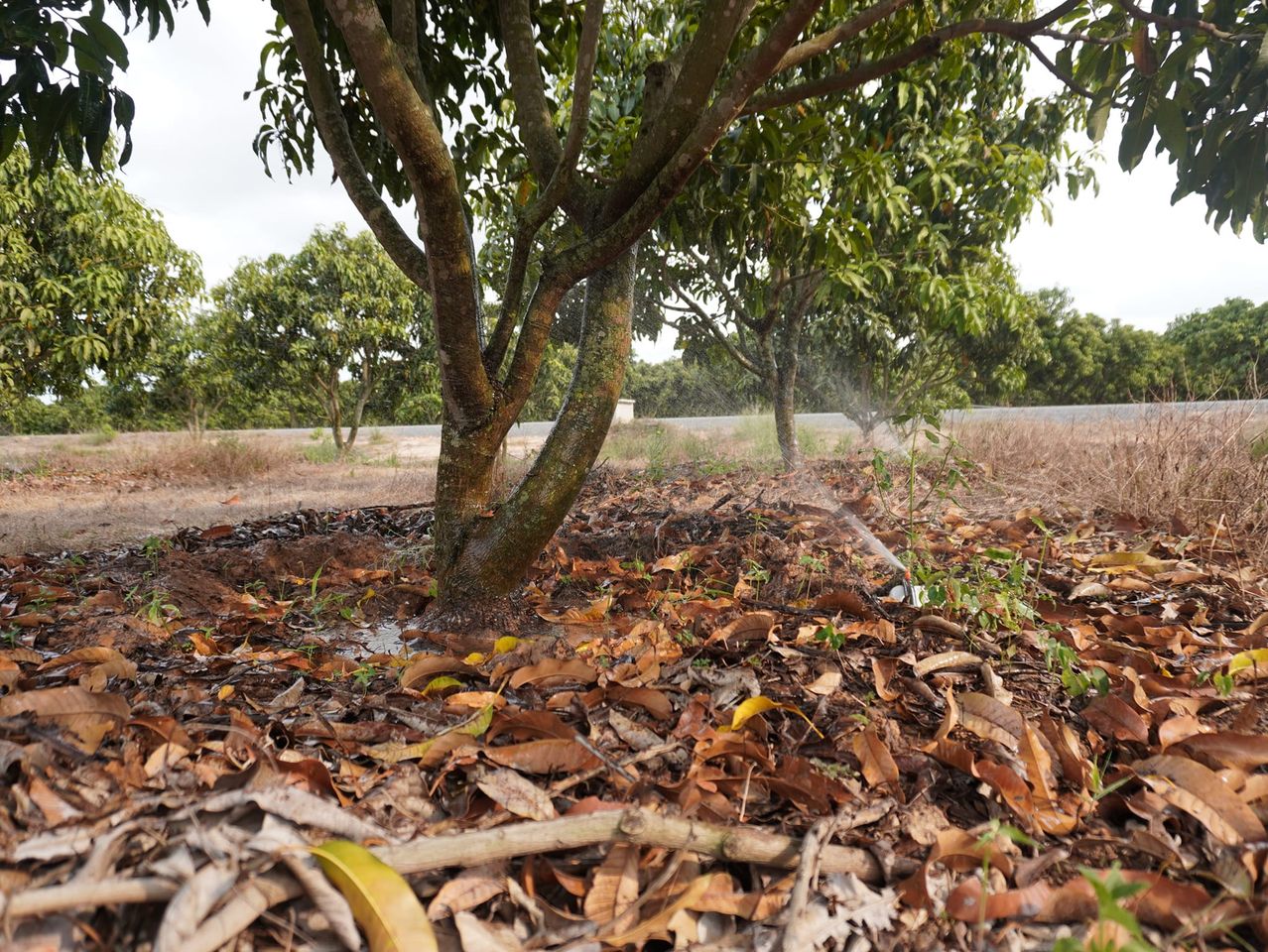
To combat the heat, Mr. Samphueak and his group installed water piping systems to each tree, an investment that has already cost 50,000 baht for the initial 18 acres. However, with water levels at Khlong Bueng Reservoir at less than 10% of its 22 million cubic meter capacity, the future looks grim. “If the irrigation system fails to meet our needs, we might have to resort to digging our own ponds or bore wells,” he added, a solution that would drive up production costs during a time of unfavorable agricultural prices.
Additionally, the severe heat and ongoing drought could exacerbate pest outbreaks, including tobacco caterpillars and aphids, which have already begun to damage the crops further. “This year’s drought is severe, and it will lead to outbreaks of diseases and pests that harm our produce,” Mr. Samphueak stressed.