It would be the perfect setting for a horror movie
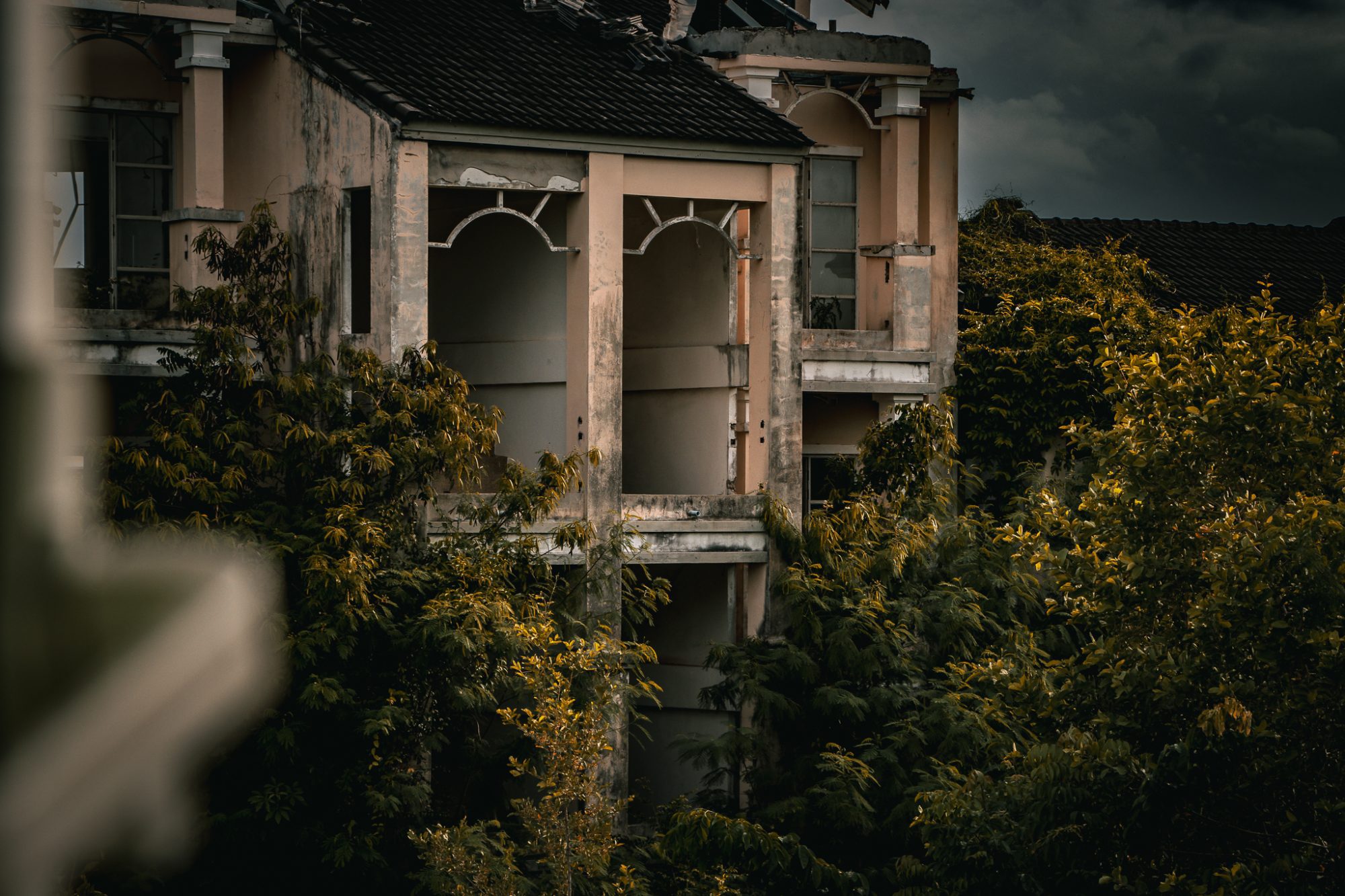
Just 30 minutes from downtown Hua Hin lies an eerie and forgotten place, now known as the ‘death village’. This abandoned property development in Cha Am has been left to decay for more than two decades, and stories of strange happenings and ghostly sightings have added to its mystique.
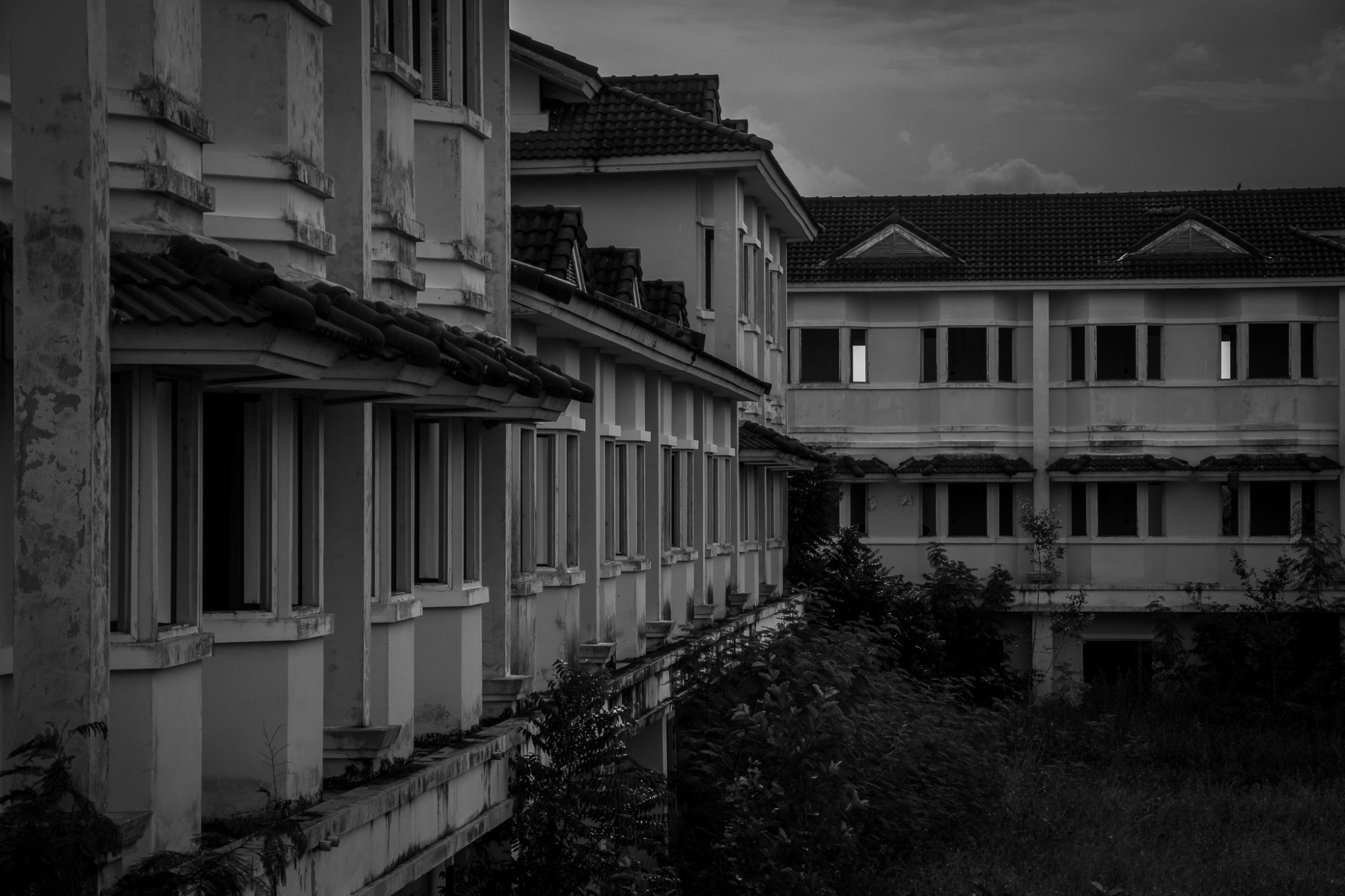
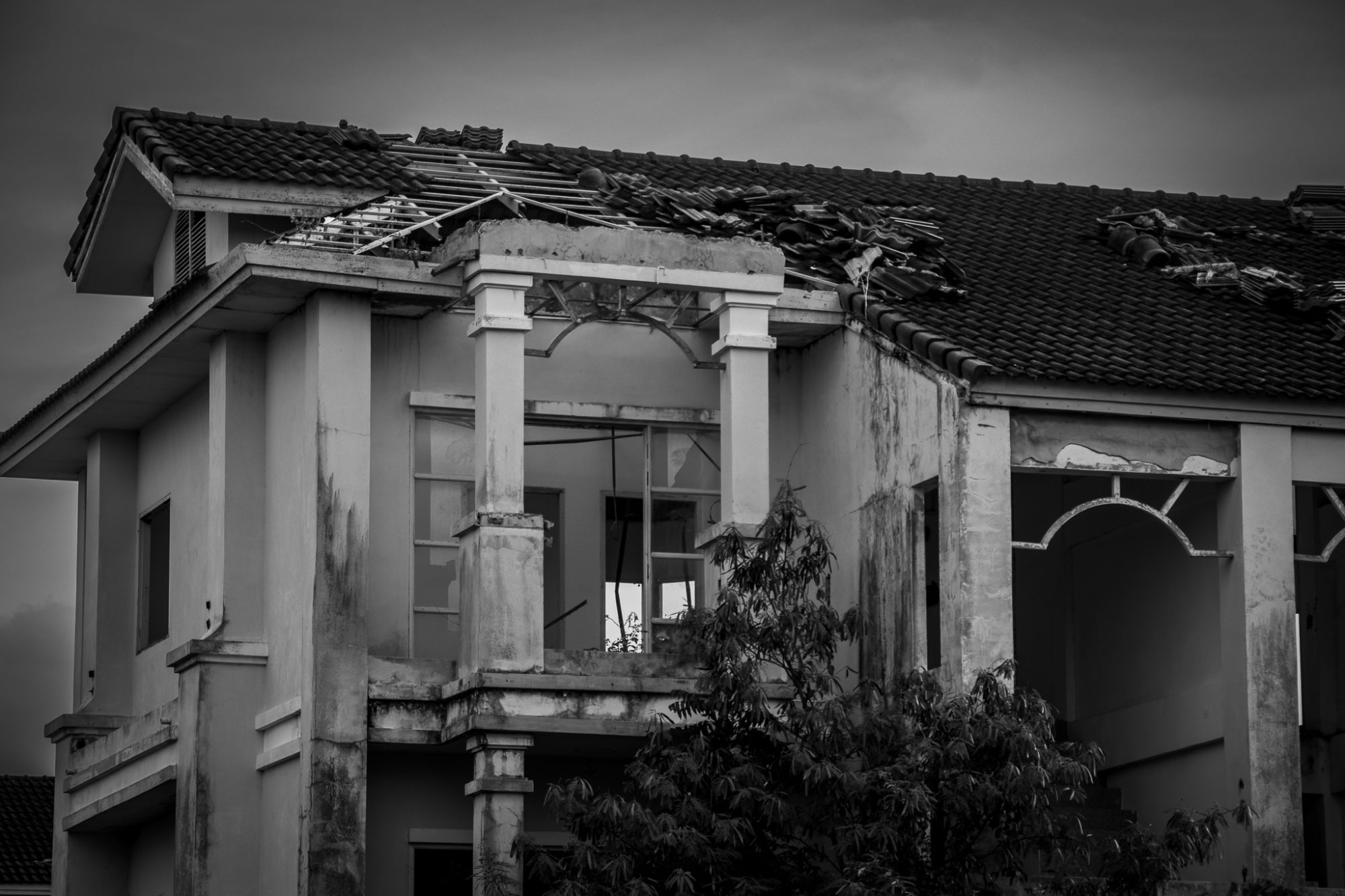
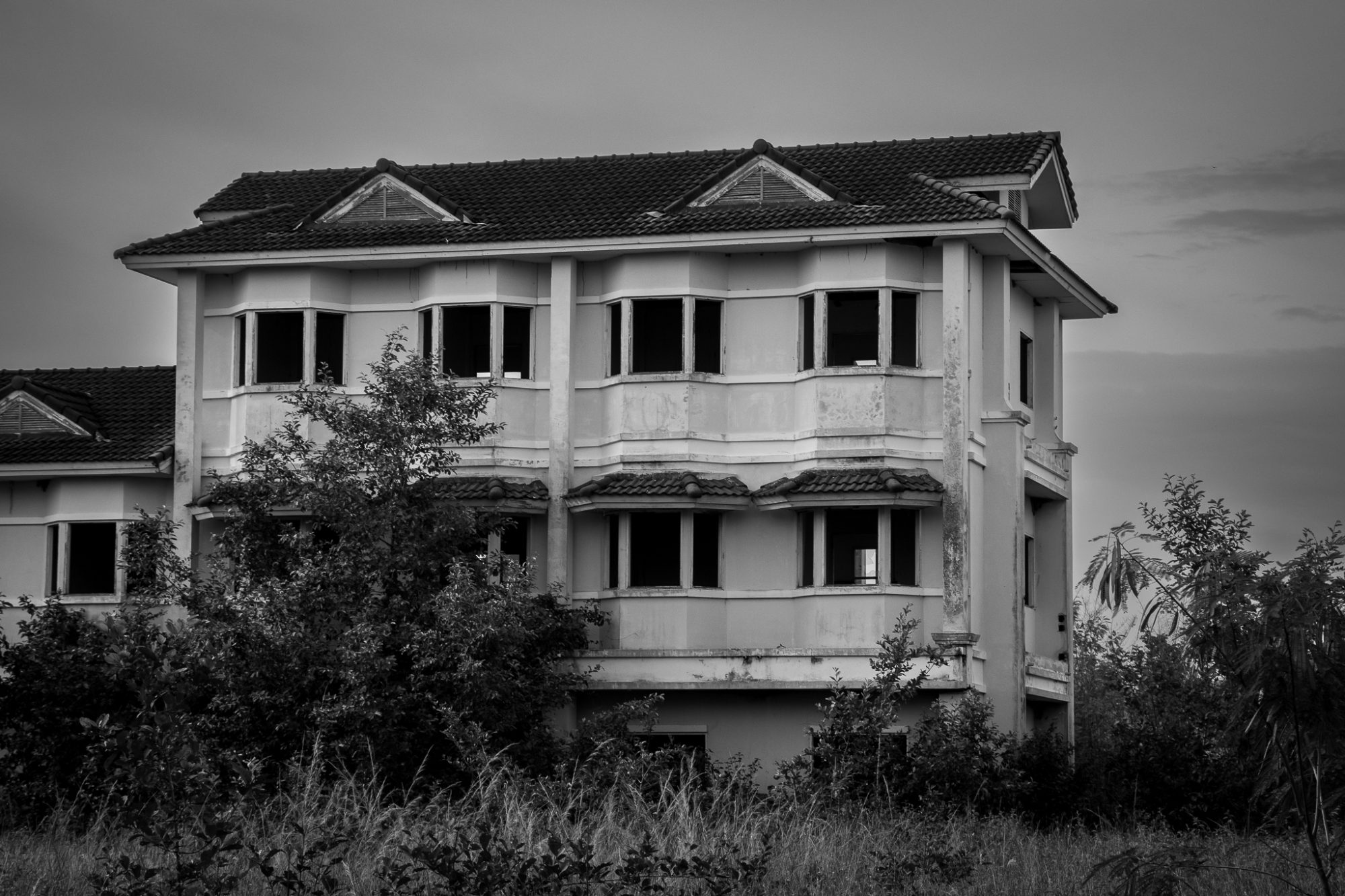
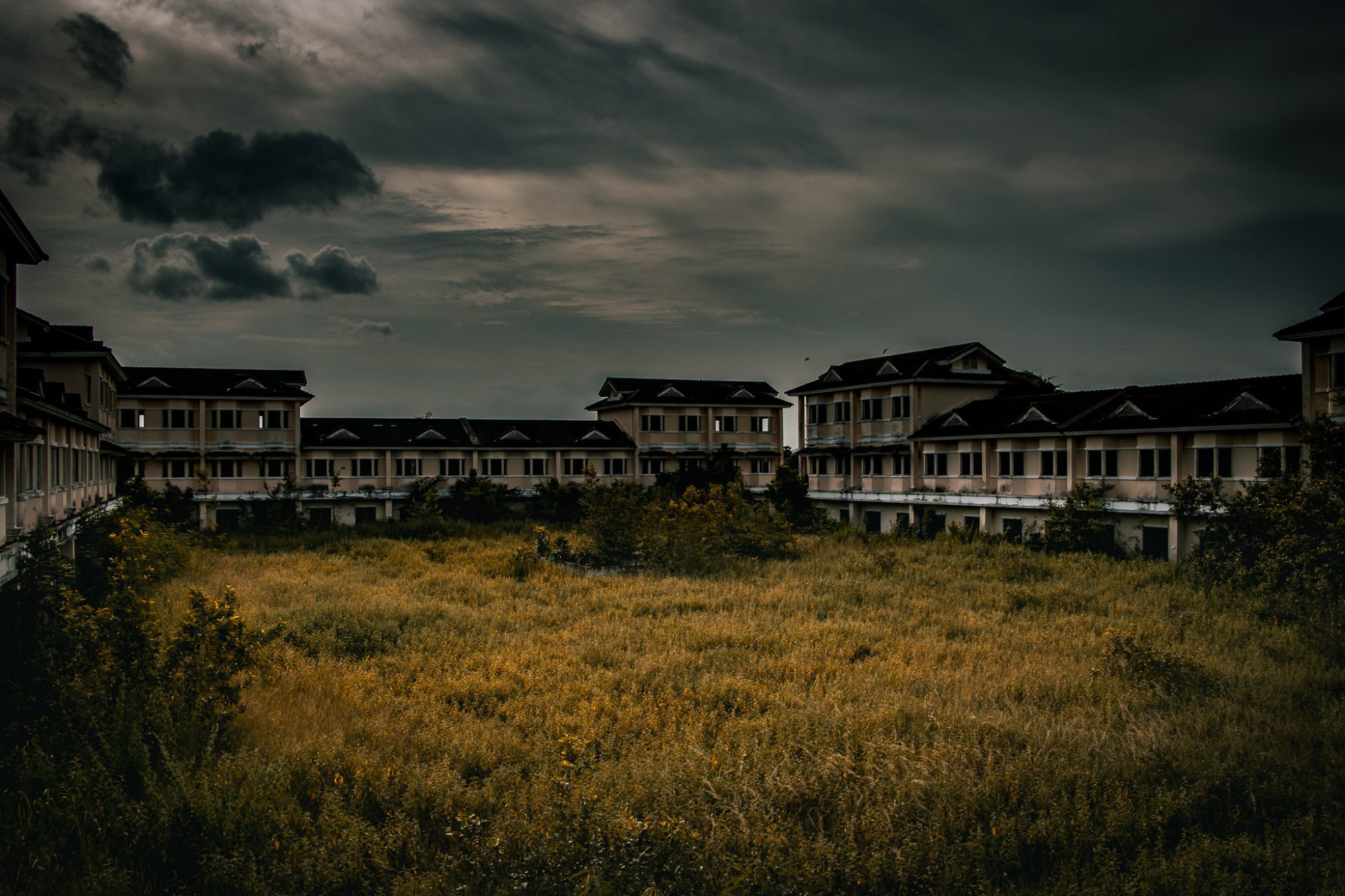
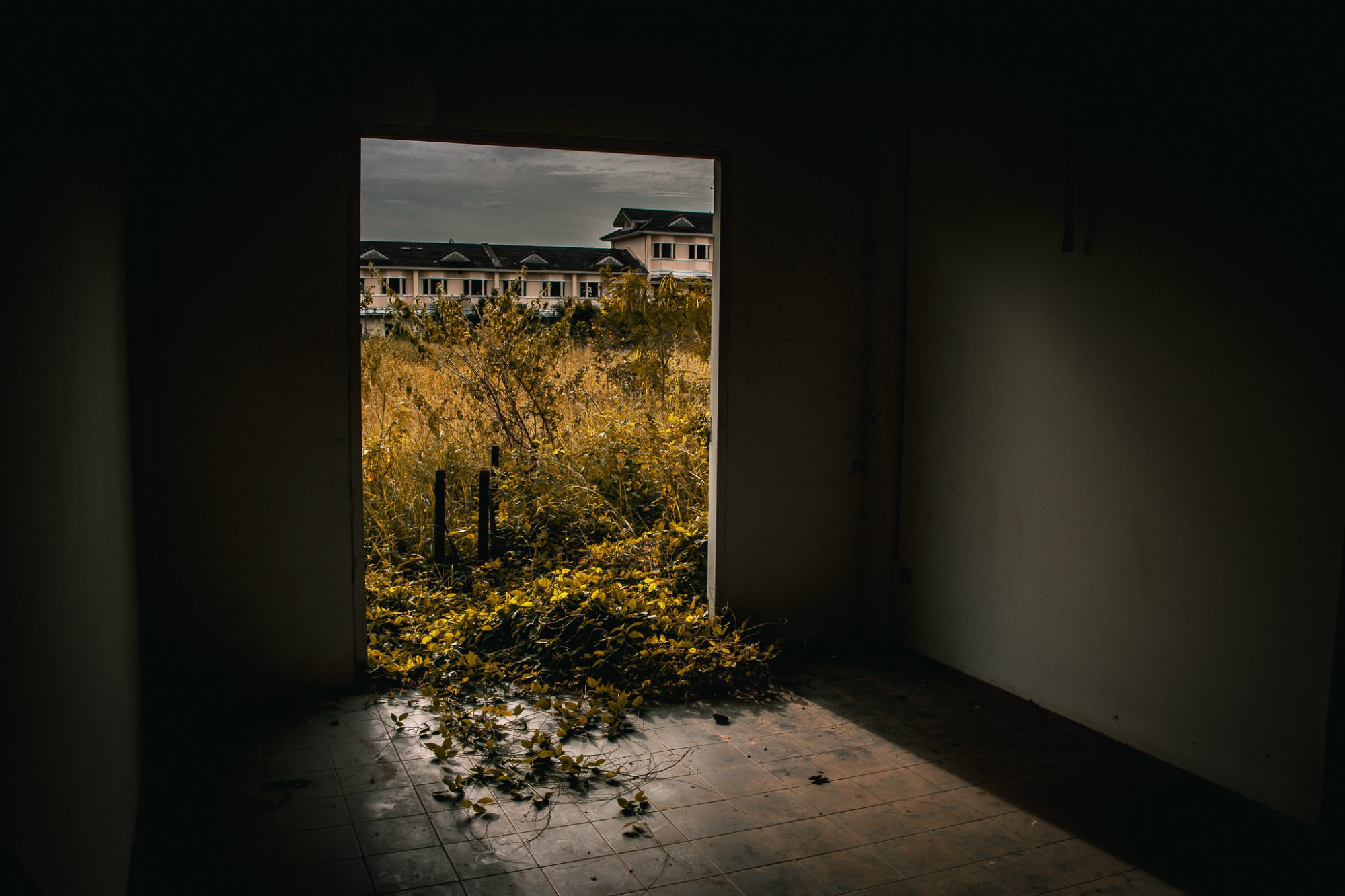
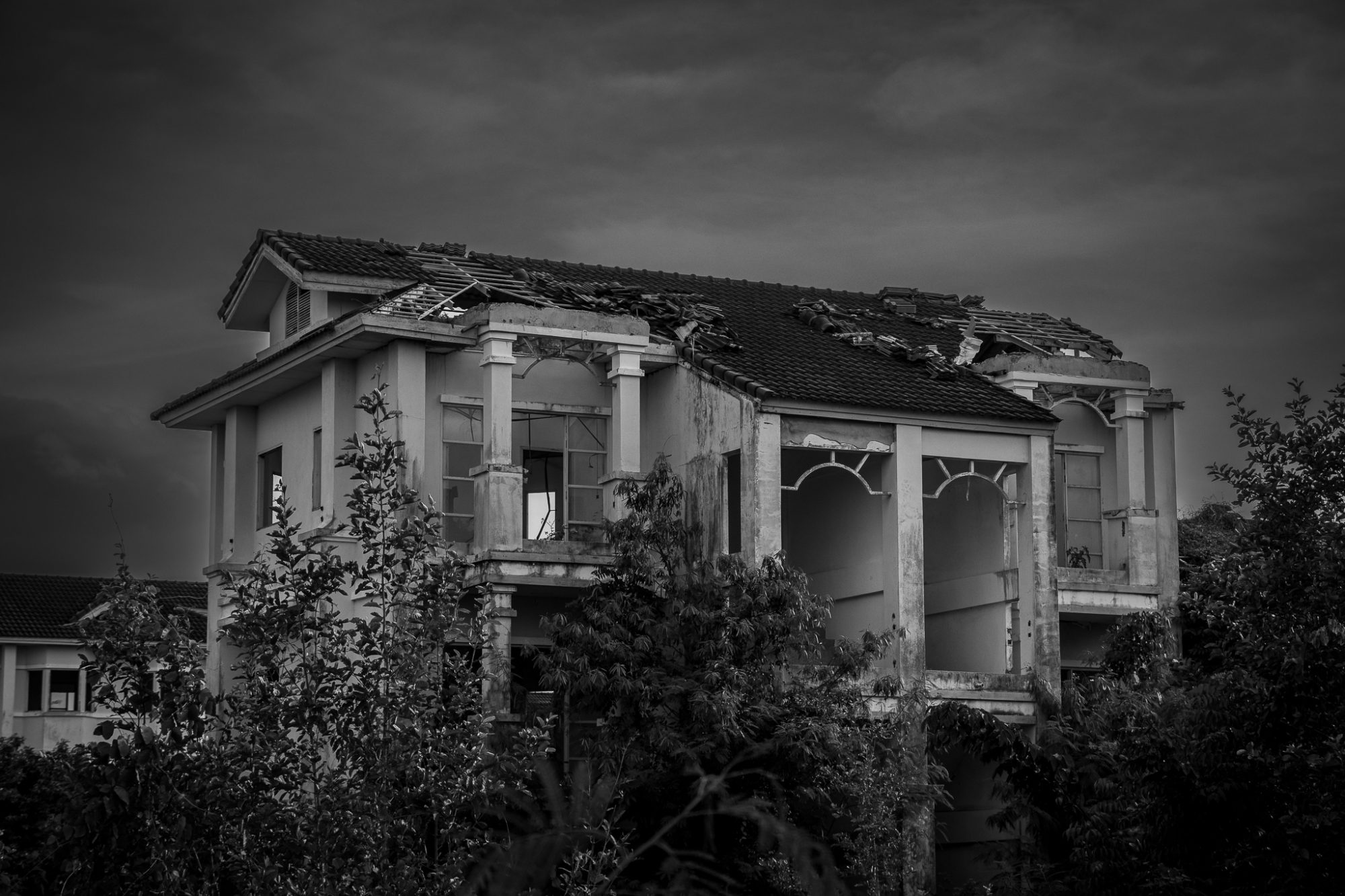
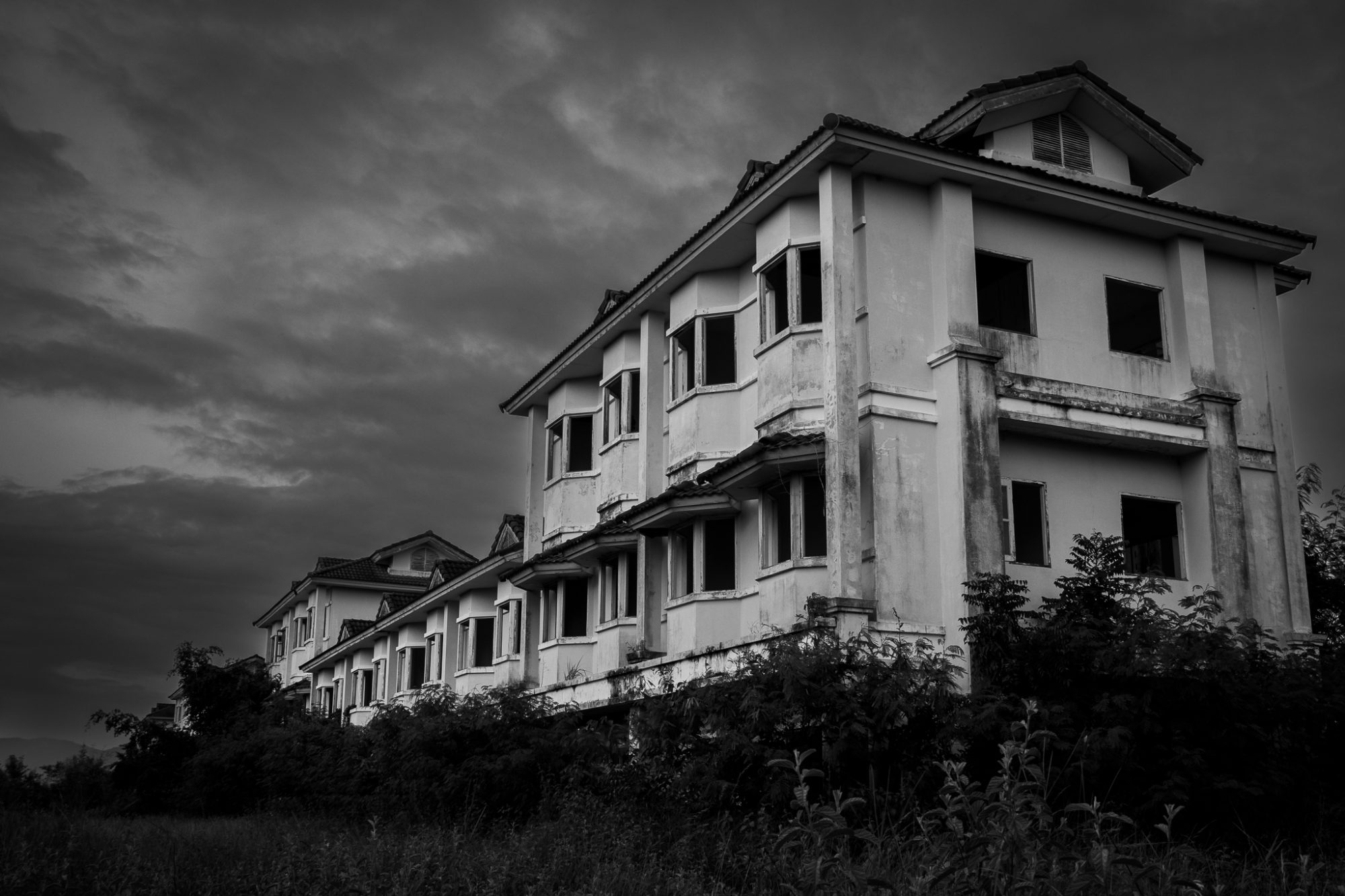
Dubbed the ‘death village’ by locals, the site consists of a cluster of half-built two and three storey houses or buildings, strewn across a large area, all now overtaken by nature. With its crumbling walls, collapsed roofs, and graffiti that ominously reads “death” and “help us”, the development has become the subject of chilling rumours and folklore. Although uninhabited, the village is not short of ghost stories and tales of supernatural occurrences.
The project’s origins are murky, and so are the reasons behind its abandonment.
Hua Hin Today first heard about the ‘abandoned death village’ during an interview with Thailand based photographer Dax Ward in July 2022.
Photographer and urban explorer Dax is known around the world for his photos of abandoned places. His photographs have been featured in CNN, The Guardian, The Daily Mail, The Sun, Lad Bible, the Weather Channel, Lonely Planet and many more.
Ever since the meeting with Dax, the ‘death village’ (the location of which Dax did not disclose) has always remained with us. Purely by chance, we recently discovered the location.
After visiting the site and investigating the stories, Hua Hin Today uncovered three leading theories as to why the development was never completed.
A horrific crime?
One of the more sinister rumours surrounding the village is that it was the scene of a brutal murder. According to local accounts, a young woman was allegedly murdered by her jealous boyfriend on the site after it was discovered she was involved in a love triangle. Her body, as the story goes, was found by a construction worker, and her restless spirit has haunted the area ever since.
Several people living nearby claimed to have heard screams coming from the village at night, while others mentioned that many believe the site is haunted by the woman who was killed. Some even avoid passing by, fearing bad luck or encounters with her ghost. However, despite these stories, no one could provide concrete details, and Hua Hin Today could find no official records of such a crime taking place.
It is possible that this tale is nothing more than a myth—one that grew over time as the site fell into disrepair. Nonetheless, the fear of ghosts and bad luck is said to be one of the reasons why no attempts have been made to revive the project.
Impact of the 1997 financial crisis
Another theory points to Thailand’s 1997 financial crisis, commonly referred to as the ‘Tom Yum Goong’ crisis, as the reason for the development’s abandonment. The economic meltdown that gripped Thailand during this period brought many construction projects to a sudden halt, and some believe the death village was a casualty of this crisis.
However, based on the available information, this theory may also be flawed. Construction on the development is thought to have started after 1997, with some saying as late as the early 2000s. This would suggest that the financial crisis may not have been the direct cause of the project’s downfall.
A failed business venture
The third theory, and perhaps the most likely, is that the development was simply a failed business venture. It is believed that the site was intended to serve as student accommodation for a local university. While one university still operates nearby, there used to be a second, an international university that closed in 2021. That institution had faced accusations of financial mismanagement and other controversies, including concerns over the welfare of students and staff.
In one particularly troubling case, a lecturer from the now-closed university was found dead in a Hua Hin hotel, his body reportedly covered in bruises. Despite the official cause of death being given as “circulatory failure,” his friends and family raised concerns about a possible cover-up. This added to the university’s already tarnished reputation.
As the university struggled, the need for additional student accommodation likely diminished, and the developers may have simply run out of funds. Half-finished construction projects are not uncommon in Thailand, and the ‘death village’ could be yet another example of a development left to stagnate due to financial difficulties.
A village in decay
Today, the development stands in stark contrast to its intended purpose. Overgrown with weeds, ivy, and other vegetation, the houses are slowly being reclaimed by nature. When Hua Hin Today visited the site, we found some evidence that someone may have attempted to restart construction. In one building, there were cans of paint and a faint smell of fresh paint in the air. Some of the windows appeared newer than the others, suggesting that renovations were started but later abandoned.
The area is eerily quiet. Despite being located near a road, there were no street dogs, and the usual sounds of traffic were absent. During our visit, a large owl flew overhead, startling us as it swooped low over the abandoned buildings.
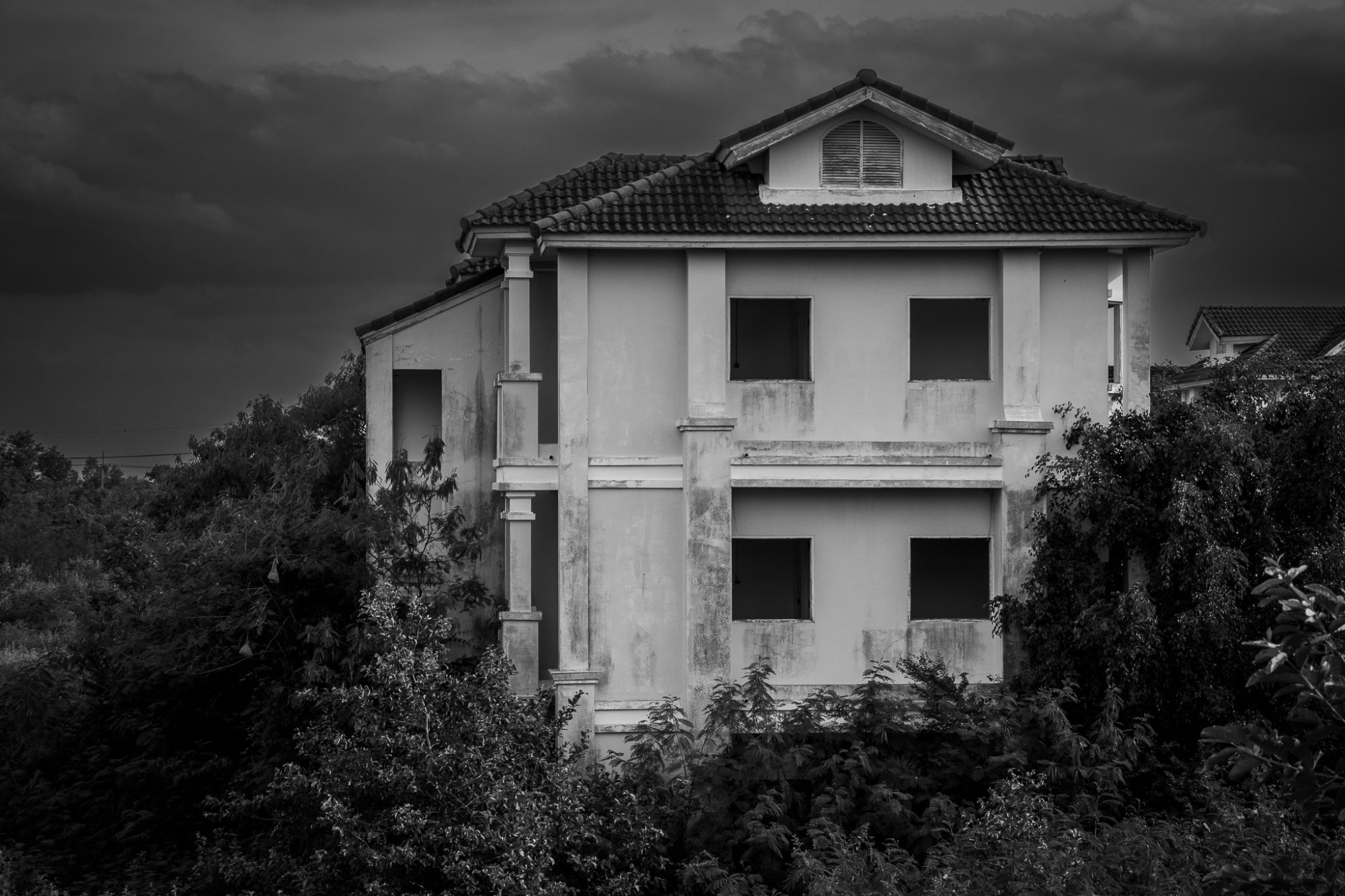
For now, the site remains frozen in time—a symbol of what could have been, now left to rot. Whether haunted by the ghosts of its past, the scars of economic turmoil, or simply the remnants of a failed business plan, the ‘death village’ continues to intrigue those who come across it.
What will happen to the site remains unknown. While there are no immediate plans for its redevelopment, the mystery and folklore surrounding the ‘death village’ seem destined to linger for years to come.