
The Inspector General of the Prime Minister’s Office visited Prachuap Khiri Khan Province on Monday to oversee the implementation of key government policies, with a strong focus on the urgent suppression of narcotics and e-cigarettes, as instructed by Prime Minister Paetongtarn Shinawatra.
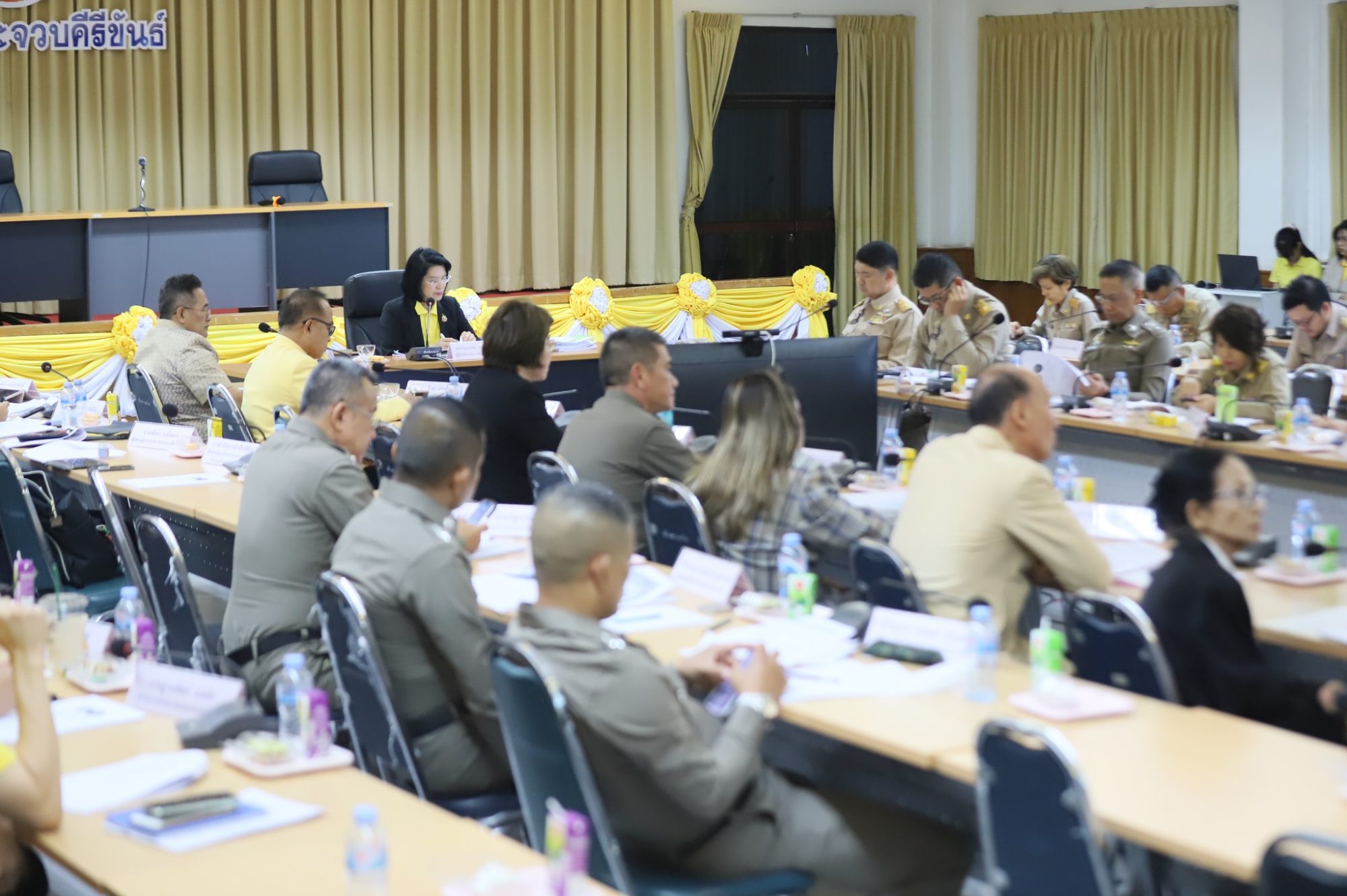
The visit, led by Mrs Kobphet Hanphatthanaphanich, Inspector General for Inspection Zone 4, included a meeting at the Koh Lak Room on the fifth floor of the Prachuap Khiri Khan Provincial Hall. She chaired the first integrated inspection session of the 2025 fiscal year, joined by ministry and department inspectors, public sector advisors, and local officials. Among those present were Mr Kittipong Sukhapakun, acting Governor of Prachuap Khiri Khan, Deputy Governor Mr Preeda Sukjai, and heads of relevant provincial agencies.
The agenda covered several government priorities, including action on climate change to reach net-zero greenhouse gas emissions, the promotion of soft power initiatives, and the introduction of a three-year interest payment suspension scheme known as the “You Fight, We Help” project. However, the spotlight was firmly on tackling narcotics and e-cigarettes, with the Prime Minister demanding visible results within 30 days.
Prachuap Khiri Khan is one of 10 pilot provinces expanding efforts to combat drug issues, building on models established in Nan and Roi Et. A programme in Hua Hin District has already concluded, and plans are underway to roll it out across all districts. The “Re-Xray” initiative will screen residents aged 12 to 65 in every village and community to identify drug users, aiming to enrol them in treatment by July 28, 2025. Alongside this, rehabilitation and vocational training are being offered to prevent relapse, while authorities work to dismantle trafficking networks.
The province has set up three rehabilitation centres to support these efforts. The Mini Thanyarak facility at Bang Saphan Noi Hospital provides 14-to-28-day inpatient treatment with five beds. The Royal Thai Army’s Citizen Rehabilitation Centre in Pranburi District and the Royal Thai Air Force’s facility in Mueang Prachuap District each offer 120-day programmes with 30 beds.
On the e-cigarette front, data from the Health Data Center between October 1, 2024, and February 20, 2025, revealed that 175,933 people aged 15 and over—51.33% of the province’s 342,733 residents in that age group—were screened for smoking habits. Of these, 10,121 (5.75%) were smokers, with 6,699 (65.72%) receiving treatment. Twelve were identified as e-cigarette users. The Provincial Public Health Office is distributing educational materials to schools to highlight the risks of smoking and vaping, while surveillance networks monitor areas near educational institutions. Police are also inspecting the illegal sale of e-cigarettes around schools to enforce no-vaping zones.
Mrs Kobphet stressed the government’s commitment to addressing narcotics and e-cigarettes, urging agencies to coordinate their efforts for swift results. She noted that e-cigarettes, often designed to attract young people and containing harmful substances, require strict controls to protect youth. She also called for increased awareness of climate change impacts and support for the government’s 13 soft power initiatives, aimed at boosting skills, creating marketable products, and raising Thailand’s tourism profile.