
Prachuap Khiri Khan’s governor has outlined an ambitious new plan aimed at positioning the province as a leading national-level tourism destination, with a renewed focus on local identity, digital innovation, and event-driven economic development.
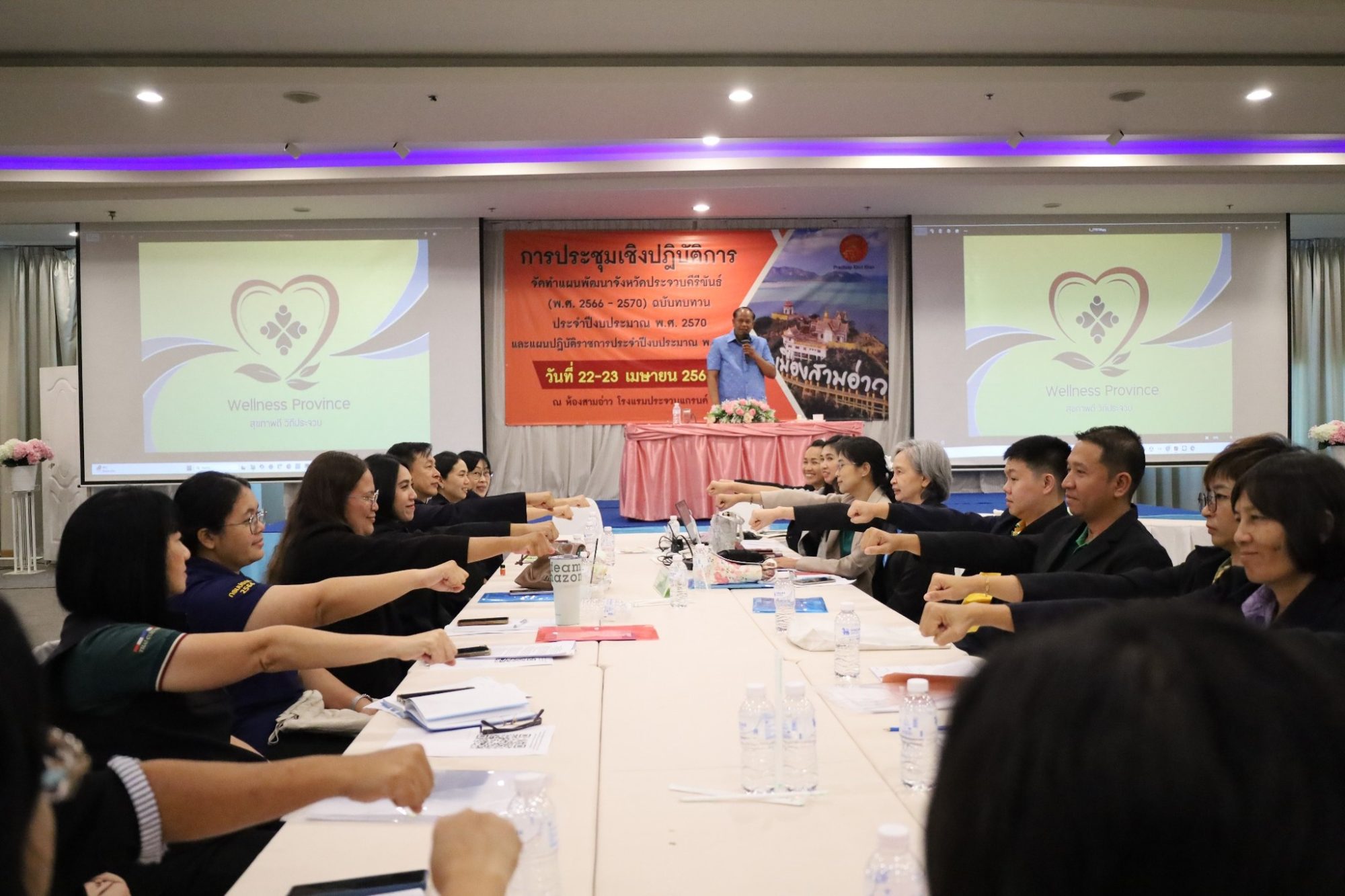
The plan, part of the “Next Move PRACHUAP: Prachuap Must Move Forward” initiative, was presented by Governor Sitthichai Sawatsaen during a workshop on Wednesday (23 April) at the Sam Ao Conference Room in Prachuap Grand Hotel. The workshop was held to formulate revisions to the Provincial Development Plan (2023–2027) and the Operational Plan for the fiscal year 2027.
A key part of the initiative is the rebranding of Prachuap Khiri Khan’s tourism offering, with the governor calling for district-specific tourism campaigns that highlight unique local characteristics. Each district will be allocated 1 million baht to develop and promote tailored activities, under the direction of the Provincial Office of Tourism and Sports.

As part of the strategy, funding for the annual Sam Ao City event will be increased from 3 million to 5 million baht. The provincial administrative organisation will contribute an additional 2 million baht to support the event, which is seen as a flagship in the province’s calendar.
There are also plans to continue promoting gastronomy initiatives with a focus on halal food and health-conscious cuisine, designed to attract more tourists from Arab countries. Meanwhile, sports tourism will be expanded through the organisation of premium events in key districts, including Hua Hin, Pranburi, and Sam Roi Yot. A highlight of the sporting agenda will be the Yutthasingh Muay Thai project, a national-level activity to be hosted in the province in 2027.
To strengthen the province’s digital appeal, a dedicated tourism application is also in development, modelled after a similar initiative in Nakhon Phanom.
The Next Move PRACHUAP policy also places emphasis on agriculture, renewable energy, and social wellbeing. In agriculture, the plan includes the expansion of Thap Sakae coconut cultivation, promotion of organic farming, and value-added processing of key crops such as pineapples. There is a push to elevate local products to Geographical Indication (GI) status to enhance their marketability.
Renewable energy will be promoted through the development of bioenergy and biomass projects that make use of agricultural waste, while water resource improvements for both agriculture and industry are also on the agenda.
In terms of community development, the plan includes expanding elderly care centres, prenatal education for expectant mothers, and wider implementation of the “Miraculous 1,500 Days” initiative, which supports the health and development of children from birth through primary school. Other social goals include enhanced school meal programmes, increased access to scholarships, and support centres for vulnerable groups.
The creation of a community-focused digital application is also part of the strategy, intended to serve as a platform for delivering local services and resolving issues more efficiently.
Environmental sustainability features throughout the plan, including improved safety measures at tourist sites, especially water-based locations, and upgrades to village water systems using solar-powered technology.
Governor Sitthichai emphasised that the overarching aim of the development plan is to strengthen the local economy and ensure that growth and income are distributed across communities more evenly, laying a foundation for a more self-reliant and sustainable future.
