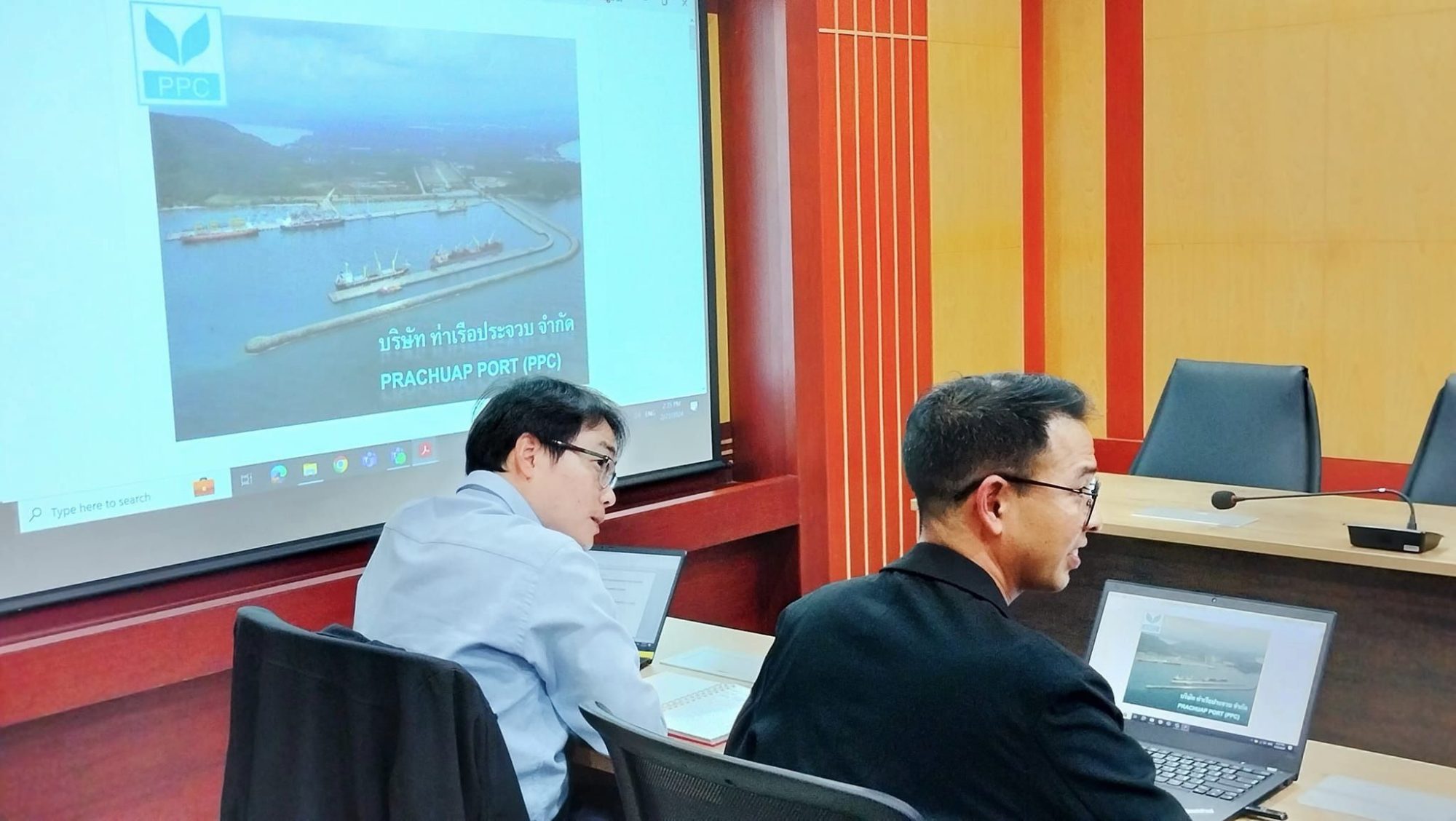
On Friday (Feb 23), a delegation led by Mr. Jane Namchaisiri, Vice Chairman of the Senate Committee on Commerce and Industry, visited Prachuap Khiri Khan Province to evaluate the potential integration of Prachuap Port with the proposed $28-billion land bridge project.
This ambitious project aims to create a direct transportation link across Thailand’s narrow south, offering an alternative route for cargo ships that currently navigate the longer passage through the Malacca Strait and Singapore.
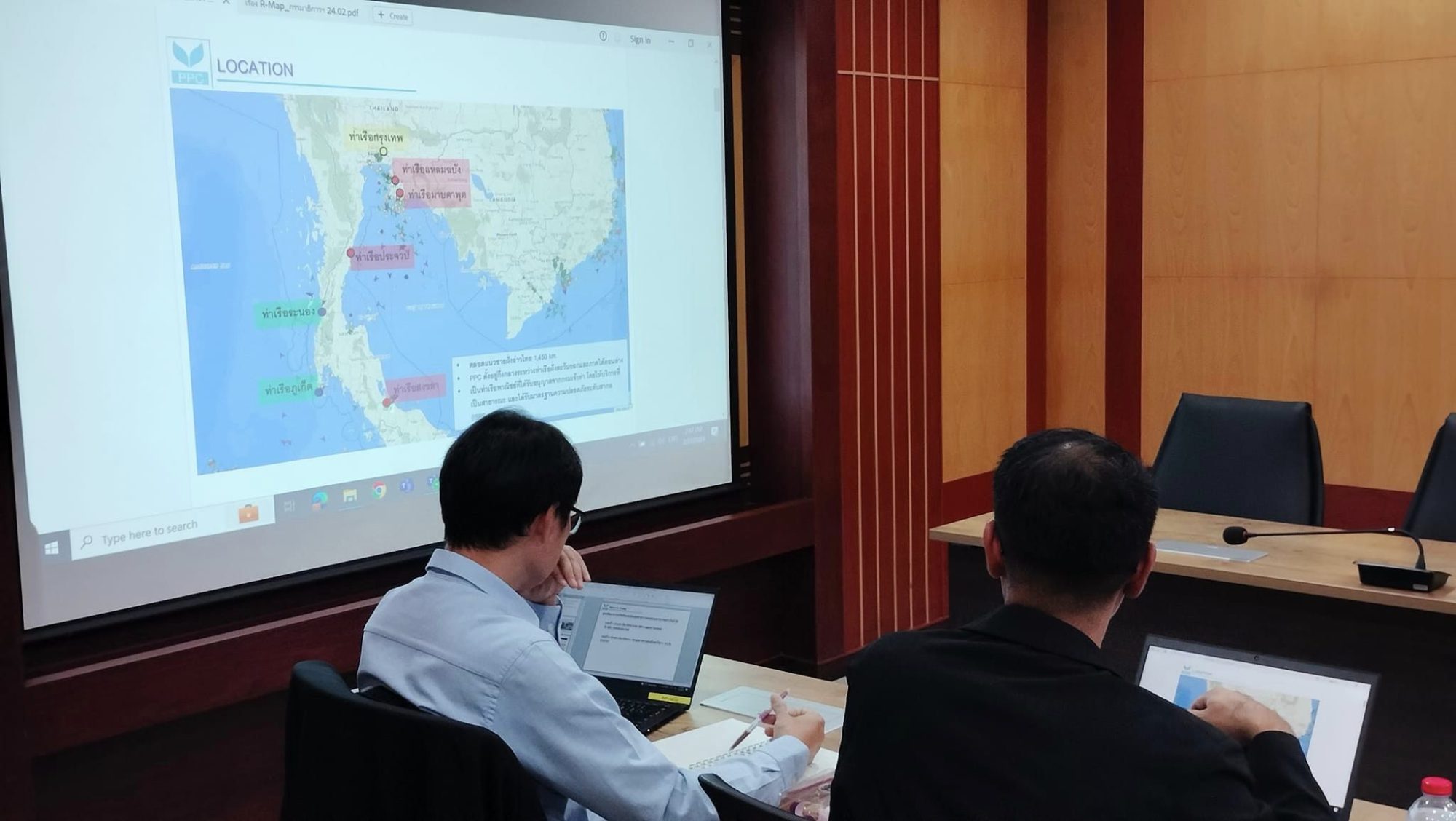
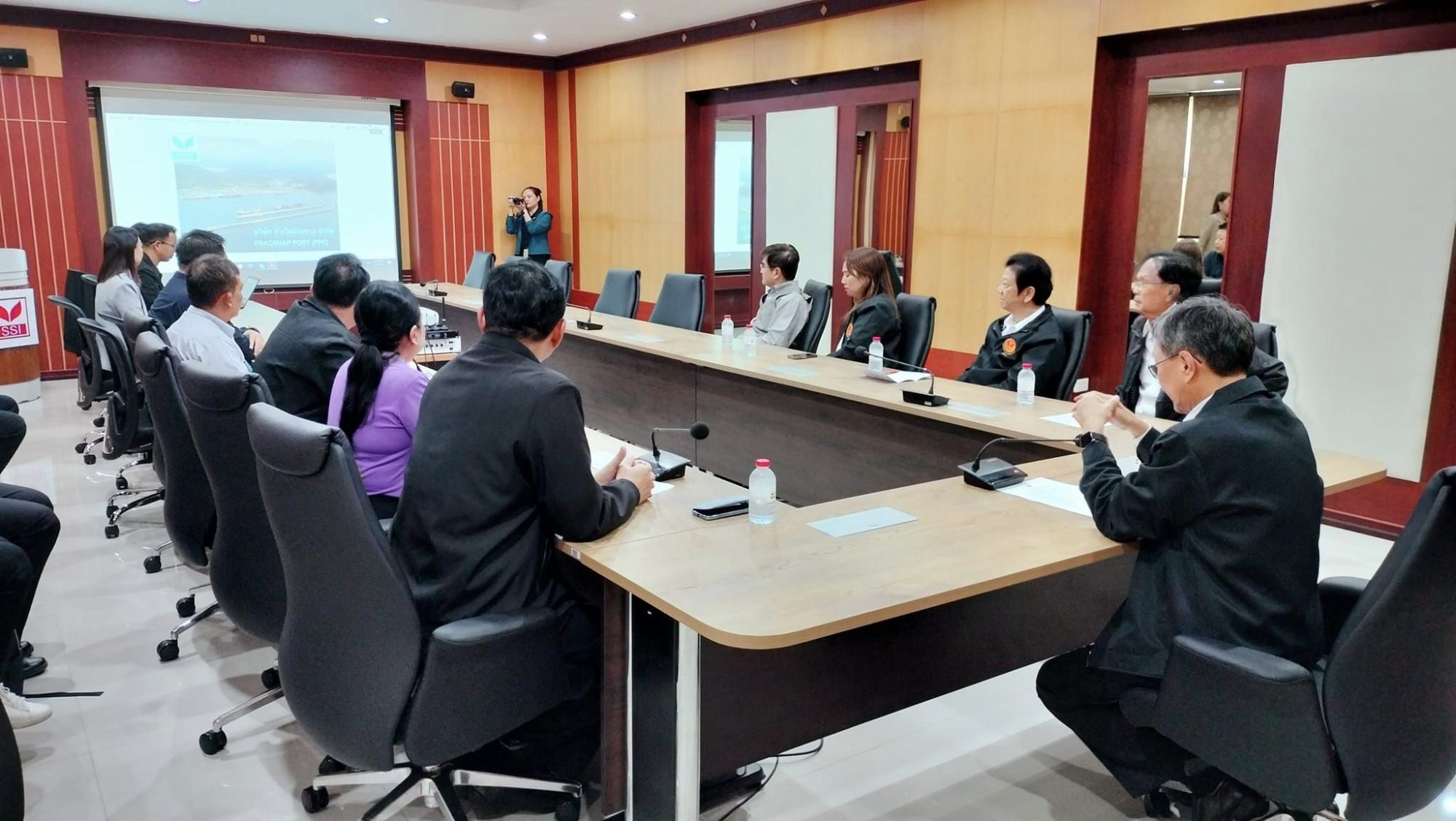
The visit, hosted at the facilities of Sahaviriya Steel Industries Public Company Limited (SSI) in Bang Saphan District, one of Thailand’s leading steel producers, included assessments of the logistics, deep-sea port, and steel industries. Mr. Kittiphong Sukphakulkul, Deputy Provincial Governor, represented the provincial leadership and, along with executives from Sahaviriya, showcased the capabilities of Prachuap Port.
Prachuap Port, operated by Prachuap Port Co., Ltd., a subsidiary of Sahaviriya, boasts four berths that can accommodate both international sea-going and coastal transport vessels.
The facility is equipped with a deep-water channel enhanced by a wave-breaking dam, constructed from precast concrete to mitigate the impact of waves and wind, ensuring safe docking and operations for ships. Spread over an area of 670 acres, with an additional customs-controlled zone covering 80 acres, including warehouse space, the port stands as an example to the region’s economic growth potential.
Plans are underway to develop a railway link connecting the port to the Sahaviriya Group’s industrial zone, further positioning Prachuap Port as an important transportation hub for the lower central region of Thailand. Officials believe this infrastructure could facilitate maritime transport between the East and West coasts, or serve as a link in the proposed land bridge project, enhancing connectivity between the Gulf of Thailand and the Andaman Sea.
If integrated with the land bridge project, Prachuap Port could play a significant role in streamlining maritime logistics, offering a viable and efficient alternative route for global shipping lanes, and significantly contributing to the economic corridor of the southern region.