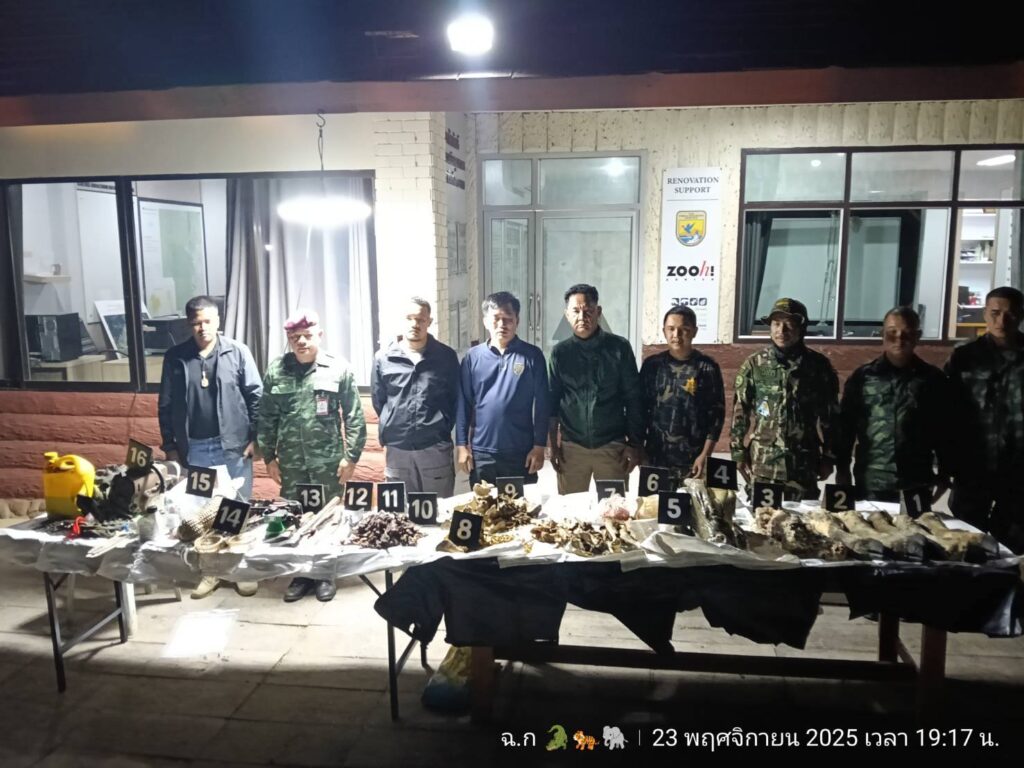
A poaching gang operating inside Kaeng Krachan National Park has been broken up after a raid by a special task force under the Ministry of Natural Resources and Environment. The operation, which targeted a group hunting protected wildlife including gaur, led to the seizure of rifle casings, carcass parts and dried meat. Officials say the poachers were hired by an external financier.
The raid took place on 23 November near the Mae Khamey Bon community in Ban Tha Salao, Yang Namklat Nuea, with officers from the Kaeng Krachan National Park working alongside the Kaeng Krachan District Chief’s Office and the Kaeng Krachan Special Forces Training Unit. Park chief Mongkol Chaipakdee said the team had been monitoring the poaching group, who had previously been active in the area.
Authorities recovered 29 items of evidence, including .44 Magnum rifle casings, shotgun casings, seven pieces of gaur remains, and more than two kilogrammes of fresh and dried gaur meat, some of which had already been cooked into curry. Officers also found bones from other protected species such as deer and a small tiger species. Hunting equipment including a chainsaw, traps, knives, axes, headlamps and a gun-mounted laser were also seized.
Poaching gang Kaeng Krachan raid and investigation
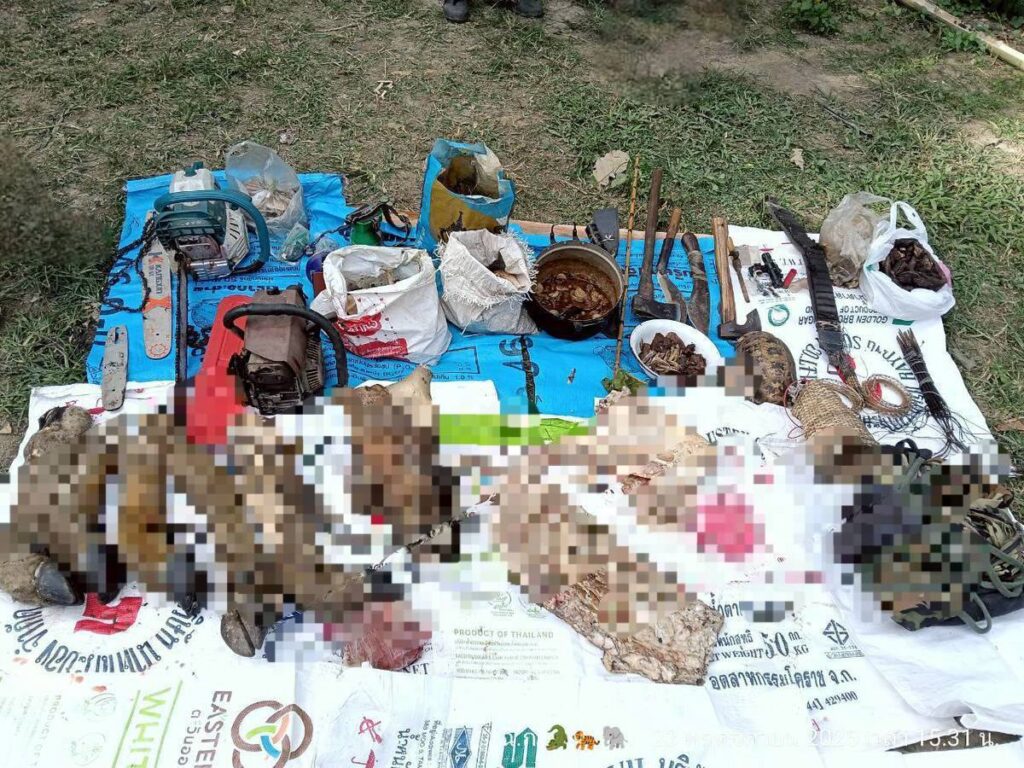
During the operation, officers encountered two suspects who fled into the forest. They were later identified from photographs as a man known as Ta, from Phu Phlu village in Yang Namklat Nuea, and a woman working in a Section 64 land plot. Investigators believe the pair were part of a larger network hired by an outside investor who supplied high-powered rifles for hunting wildlife inside the park.
Mr Mongkol said the case had been forwarded to police, with charges filed under the Wildlife Preservation and Protection Act (2019) and the National Reserved Forest Act (1964). He added that the investigation would continue to identify and arrest those who financed and organised the poaching.
He said the wildlife crime operation underlined the government’s commitment to protecting endangered species such as the gaur, which remains at risk despite ongoing conservation efforts.