
Prime Minister Anutin Charnvirakul has ordered provincial governors and land officials to complete investigations into suspected unlawful nominee arrangements by December, warning that influential figures and government officials will face action if found to have broken the law.
Anutin, who is also interior minister, launched the operation at Government House on Monday, 19 October. Led by the Department of Lands, it will focus on investigating high-risk cases, enforcing the sale of unlawfully held land and preventing new nominee arrangements.
The crackdown targets arrangements in which people or companies hold land on behalf of foreign nationals to circumvent Thai law. It also covers illegal foreign business activities, including cases linked to money laundering and tax evasion.
Anutin said investigations must go beyond the names appearing on land titles and shareholder registers to identify those who exercise control and ultimately benefit. Officials must examine funding sources, financial transactions, assets and associated individuals to establish the networks behind suspected offences.
He said no one was above the law, regardless of their influence or position. Action could include investigations, asset seizures and prosecutions in accordance with legal procedures, whether those involved were private individuals, business operators or government officials.
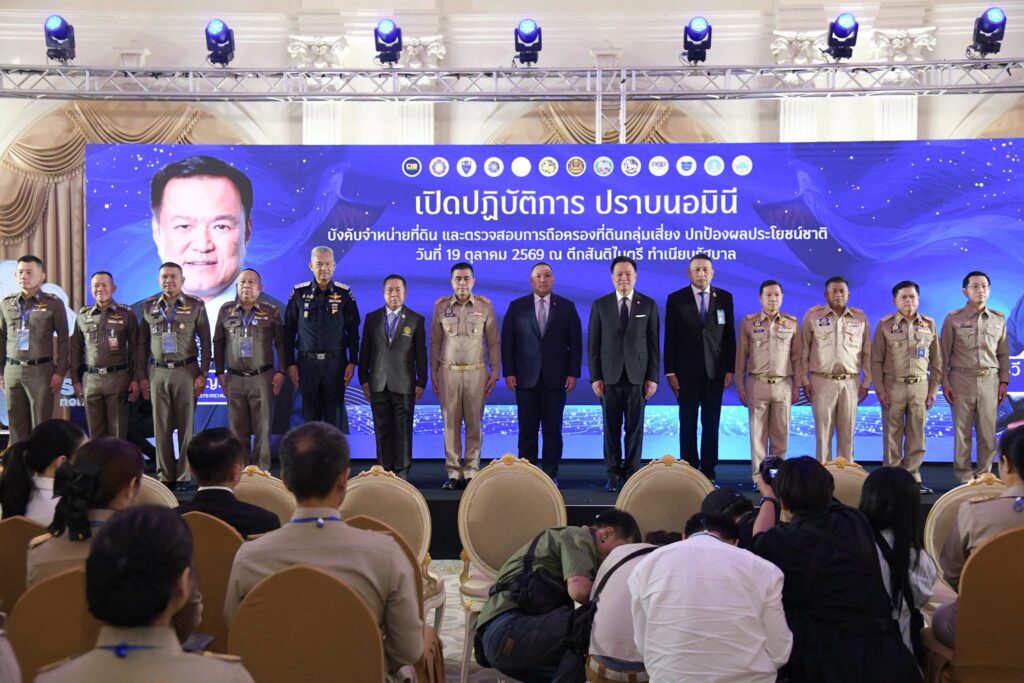
He also pledged protection for officials carrying out their lawful duties and said anyone who threatened or harmed them would face prosecution.
Under the LAND ACTION operation, the Department of Lands and provincial governors must prioritise cases, assign responsibility and set clear procedures and deadlines. Investigations into high-risk groups must be completed by December 2026, with suspected links to nominee networks or other offences referred promptly to the relevant authorities.
Where land is found to be held unlawfully, officials must enforce its sale under the law and scrutinise subsequent transfers. Anutin said this was necessary to prevent one nominee being replaced by another while the underlying arrangement continued.
Agencies were also instructed to strengthen checks before and after the registration of land rights and legal transactions. Monitoring will include changes in shareholding structures and conduct that could indicate land is being held unlawfully on behalf of foreign nationals.
The prime minister directed provincial governors and provincial land officers to begin implementing the measures immediately.
The operation will bring together information from agencies responsible for investigations, law enforcement, taxation, business registration and immigration. The Department of Lands must also coordinate with the Office of the Board of Investment to verify land rights and any conditions attached to investment privileges.
Anutin said Thailand continued to welcome honest, transparent foreign investment that complied with Thai law, including land ownership or land-use rights permitted under investment promotion legislation and other relevant laws.
The government’s approach was to be “firm with offenders and fair to those who comply with the law”, he said.
Agencies must explain the rules to the public and business operators, provide accessible channels for reporting suspected wrongdoing and regularly publish overall results. They must also respect the rights of those involved and avoid disclosing information that could affect legal proceedings.
Anutin said the operation’s success should be measured by whether cases reached a conclusion and the law was effectively enforced, rather than simply by the number of suspected offences detected.
He added that the government’s coordinated enforcement work would also address drug offences, human trafficking and economic crime.